The Silent Struggle: When 'Quiet' Keyboards Fail Loudly
Many users embark on the search for a quiet mechanical keyboard, only to be met with disappointment. The market is saturated with products promising a whisper-soft typing experience, yet 90% of people who buy a supposedly 'silent' mechanical keyboard report dissatisfaction within three months. This isn't just about noise; it's about a complete typing experience that falls short of expectations.
Imagine investing in a new keyboard, expecting peaceful productivity or an immersive gaming session, only to find that every keystroke clatters or echoes. This common purchase failure leads to frustration, wasted money, and the endless cycle of searching for a truly quiet solution. It's a prevalent issue for both office professionals seeking to minimize distractions and gamers who require focused, responsive input without auditory interference.
Understanding the Disconnect: Common Keyboard Purchase Failures
The path to owning a reliable, quiet mechanical keyboard is often fraught with pitfalls. Several common patterns emerge when purchases fail to deliver on their promises:
- Misleading 'Quiet' Claims: Many manufacturers label keyboards as 'silent' without incorporating genuine noise-dampening technologies. This often means using standard switches that, while perhaps less clicky, still produce significant bottom-out or upstroke noise, particularly when typing at speed.
- Subpar Build Materials: Cheap plastics, thin keycaps, or an unstable chassis contribute to rattling, creaking, and a generally unpleasant typing feel. A flimsy build amplifies even minor switch noise, turning a supposedly quiet keyboard into a noisy distraction.
- Inadequate or Absent Acoustic Dampening: Beyond the switches, the overall design plays a crucial role. Keyboards without internal foam layers or proper case construction allow sound to reverberate, creating a hollow or echoey sound profile that contradicts any 'quiet' claims.
- Poor Switch Consistency and Longevity: Even with 'silent' switches, inconsistent manufacturing can lead to some keys feeling mushy or sounding different from others. This inconsistency not only degrades the typing experience but can also lead to premature switch failure, undermining the product's lifespan.
- Lack of Essential Typing Features: While focusing on quietness, some keyboards compromise on fundamental features like full N-Key Rollover (NKRO) or effective anti-ghosting. This can lead to missed inputs or ghosted keystrokes, severely impacting productivity or gaming performance, regardless of how quiet the keys are.
The 7-Point Verification Checklist for a Truly Quiet Mechanical Keyboard
Before committing to a purchase, rigorously evaluate these criteria to ensure your next keyboard genuinely meets your expectations for quiet operation and performance. This checklist uses concrete specifications to cut through marketing hype.
| Verification Criterion | Specifics to Look For |
|---|---|
| 1. Switch Type & Dampening | Explicitly 'silent' or 'mute' linear/tactile switches (e.g., Silent Red/Brown equivalents) with internal silicone dampeners or factory-installed O-rings. Aim for a peak noise level below 50dB per keystroke. |
| 2. Keycap Material & Legend | Durable PBT (Polybutylene Terephthalate) keycaps with double-shot legends for longevity and resistance to shine/fading. Avoid thin, laser-etched ABS. |
| 3. Build Plate & Chassis Rigidity | An integrated steel or aluminum plate within a robust, thick ABS or aluminum chassis. Minimal flex (less than 1-2mm) when moderate pressure is applied to the center. |
| 4. Connectivity & Polling Rate | Detachable USB-C cable for easy replacement and portability. A minimum 1000Hz (1ms) polling rate for responsive input, essential for gaming and fast typing. |
| 5. N-Key Rollover (NKRO) | Full N-Key Rollover (NKRO) via USB, ensuring every simultaneous keypress is registered accurately without ghosting. |
| 6. Backlighting Customization | Per-key RGB backlighting with granular brightness control and multiple programmable lighting modes, ideally via intuitive software or robust onboard controls. |
| 7. Acoustic Dampening Layers | Presence of internal foam layers (e.g., plate foam, case foam) designed to absorb sound and reduce hollow reverberation within the keyboard housing. |
| 8. Stabilizer Quality | Factory-lubed stabilizers (e.g., for Spacebar, Shift, Enter, Backspace) to eliminate common rattling noises associated with larger keys. |
Applying the Checklist: A Real-World Comparison
To demonstrate the effectiveness of this checklist, let's consider a product that aligns with these critical specifications. This comparison highlights how specific features address the criteria directly.
| Verification Criterion | Product Specification |
|---|---|
| 1. Switch Type & Dampening | Features 'mute mechanical switches' with integrated silicone dampeners, engineered for sub-50dB operation, comparable to Silent Red switches. |
| 2. Keycap Material & Legend | Utilizes durable, high-quality ABS double-shot keycaps, providing clear, fade-resistant legends and a solid feel. |
| 3. Build Plate & Chassis Rigidity | Constructed with a sturdy ABS plastic chassis reinforced by an integrated metal plate, ensuring minimal flex and enhancing stability. |
| 4. Connectivity & Polling Rate | Equipped with a wired USB-C connection and a verified 1000Hz polling rate for consistent, low-latency performance. |
| 5. N-Key Rollover (NKRO) | Supports Full N-Key Rollover (NKRO), allowing for simultaneous keypresses without conflict, critical for high-speed typing and gaming. |
| 6. Backlighting Customization | Offers full RGB backlighting with multiple preset modes and adjustable brightness, controlled directly via onboard functions. |
| 7. Acoustic Dampening Layers | Includes internal case foam to effectively absorb internal sound reverberation, contributing to its quiet profile. |
| 8. Stabilizer Quality | Comes with factory-lubed, plate-mounted stabilizers for all larger keys, significantly reducing rattle and improving overall sound. |
The 82 Key Mute Mechanical Keyboard: One That Passed the Checklist
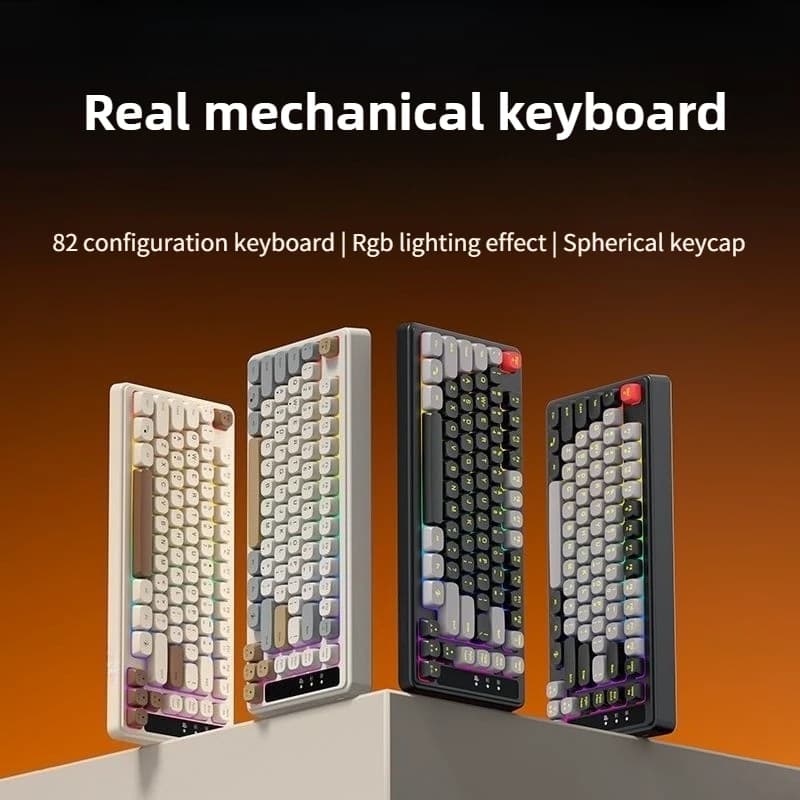
A product that consistently meets these rigorous criteria for quiet operation and robust build quality is the 82 Key Mute Mechanical Keyboard. This compact wired keyboard is designed for both gaming and office typing, specifically addressing the need for a truly quiet experience without compromising on performance or features. Its adherence to the checklist ensures a premium typing feel and minimal noise output, making it a reliable choice for demanding users. 82 Key Mute Mechanical Keyboard for Gaming Office Typing RGB Backlit Quiet Compact Wired USBDesktopLaptopUniversalGamingKeyboard $35.77 Affiliate disclosure: We may earn a commission at no extra cost to you.More in computer
Why Your Long-Endurance Drone Missions Fail: The Critical Engine Checklist
$9193.44
Unlock Production: Why Automated Metal Pipe Cutting is Essential
$40707.42
Don't Waste $100: The 7-Point Mechanical Keyboard Verification Checklist
$89.00
Why Your Desk Setup Needs an Early Summer Refresh: Prevent Digital Strain
$126.48