The Costly Reality of Unreliable Drone Power Systems
Many advanced drone projects, despite significant investment, often face a harsh reality: mission failure due to inadequate or unreliable power. Stories abound of costly quadcopters and hexacopters falling from the sky, critical data lost, or entire operations aborted prematurely. These aren't just minor inconveniences; they represent substantial financial setbacks, wasted development time, and in some cases, serious safety hazards. The promise of extended flight times and heavy-lift capabilities hinges entirely on the integrity of the power system.
For operators relying on UAVs for mapping, logistics, surveillance, or inspection, the engine is the heart of the operation. When it falters, everything else grinds to a halt. Reports indicate that a significant percentage of high-performance drone incidents can be traced back to issues with the propulsion system, specifically when hybrid engine technology is involved. This underscores the absolute necessity for a rigorous verification process before committing to any such purchase.
Understanding Why Hybrid Drone Engines Fail
The complexity of hybrid drone engines, combining internal combustion with electric propulsion, introduces several potential points of failure. Identifying these patterns is the first step toward prevention. Ignoring them can lead to recurring problems and substantial operational costs.
Inadequate Power for Specified Payload (MTOW)
One of the most common reasons for failure is selecting a hybrid drone engine that simply cannot generate enough sustained power for the drone's actual Maximum Take-off Weight (MTOW), especially when carrying specialized payloads. This leads to instability, struggling ascent rates, and potentially catastrophic power loss during critical maneuvers or adverse weather conditions. Manufacturers' claims need careful scrutiny against real-world operational demands.
Unreliable Starting and Transition Mechanisms
Hybrid systems are designed for seamless operation, but issues with the Integrated Starter Generator (ISG) or the transition between electric and gasoline power can be a major headache. An engine that fails to start remotely, experiences rough transitions, or has intermittent power delivery makes a drone unreliable for critical missions where immediate readiness is paramount. Such systems can turn a planned operation into an extended troubleshooting session.
Excessive Fuel Consumption Negating Endurance Gains
The primary advantage of a hybrid drone engine is extended flight duration. However, some systems exhibit much higher fuel consumption rates than advertised, especially under load. This directly translates to shorter mission times, more frequent refueling, and significantly increased operational costs, effectively defeating the purpose of choosing a hybrid solution for long-endurance drone applications. Data suggests that fuel efficiency often varies wildly between different models.
Complex Integration and Compatibility Issues
Integrating an advanced hybrid drone engine with existing flight control systems, battery management units, and airframes can be a daunting task. Incompatible communication protocols, non-standard mounting, or unexpected power requirements can lead to extensive modifications, unexpected delays, and the need for specialized engineering, driving up total project costs and complexity.
Poor Thermal Management and Overheating Risks
High-performance engines generate substantial heat. If the cooling system is inadequate or poorly designed, the engine can overheat, leading to reduced efficiency, component damage, or even emergency shutdowns during flight. This is particularly critical in enclosed drone frames or during sustained, high-power operations, significantly impacting the engine's long-term reliability and lifespan.
The Essential Hybrid Drone Engine Verification Checklist
To mitigate these risks, a structured approach to evaluation is indispensable. This checklist provides concrete criteria to assess the suitability and reliability of any hybrid drone engine for demanding applications. Each point addresses a critical aspect of performance and longevity for a reliable UAV power system.
| Criteria | Minimum Requirement | Why it Matters for Reliable UAV Operations |
|---|---|---|
| 1. Max Take-off Weight (MTOW) Support | 18kg (40 lbs) minimum for heavy-lift | Ensures stable flight, sufficient lift capacity, and safety margins for professional hexacopters and quadcopters. |
| 2. Hybrid Engine Type & Reliability | ISG (Integrated Starter Generator) with remote start functionality | Provides seamless power transition, quick start-up, and critical redundancy for extended drone flight. |
| 3. Fuel Consumption Rate | < 1.0 L/hour at cruise (full load) | Directly impacts flight duration and operational costs, crucial for achieving true long-endurance drone missions. |
| 4. Continuous Power Output & Voltage | 2.5 kW continuous; 14S-22S LiPo compatibility | Sustains demanding operations and integrates efficiently with high-voltage, high-performance drone systems. |
| 5. Noise Level at 1 meter | < 75 dB @ full throttle | Minimizes acoustic signature, vital for surveillance, wildlife monitoring, or operations in noise-sensitive environments. |
| 6. Operating Temperature Range | -10°C to +40°C | Guarantees consistent performance and reliability across diverse environmental conditions and climates. |
| 7. Total Power System Weight (Dry) | < 3 kg (including engine, generator, ECU) | Reduces overall drone weight, maximizing available payload capacity or extending flight time further. |
| 8. ECU & Telemetry Integration | Standard CAN bus or UART protocols for flight controller integration | Enables seamless communication, real-time monitoring, and remote diagnostics with mainstream flight controllers. |
Applying the Checklist: A Real-World Comparison
Applying these criteria to specific products reveals which systems genuinely deliver on their promises. A direct comparison of manufacturer specifications against this rigorous checklist helps eliminate guesswork and highlight suitable options for a robust UAV power system. This approach moves beyond marketing hype to focus on tangible, verifiable performance metrics.
| Checklist Criteria | Product Spec: H2 ISG Remote Starting Hybrid Engine | Pass/Fail |
|---|---|---|
| 1. Max Take-off Weight (MTOW) Support | Supports up to 18kg (40 lbs) take-off weight | Pass |
| 2. Hybrid Engine Type & Reliability | ISG (Integrated Starter Generator) with remote start | Pass |
| 3. Fuel Consumption Rate | Reported ~0.8 L/hour at cruise (full load) | Pass |
| 4. Continuous Power Output & Voltage | 2.5 kW continuous; compatible with 14S-22S LiPo systems | Pass |
| 5. Noise Level at 1 meter | Manufacturer data indicates < 70 dB @ full throttle | Pass |
| 6. Operating Temperature Range | Specified for -15°C to +45°C operation | Pass |
| 7. Total Power System Weight (Dry) | 2.8 kg (including engine, generator, ECU) | Pass |
| 8. ECU & Telemetry Integration | Integrated CAN bus for flight controller communication | Pass |
A Product That Passes The Checklist
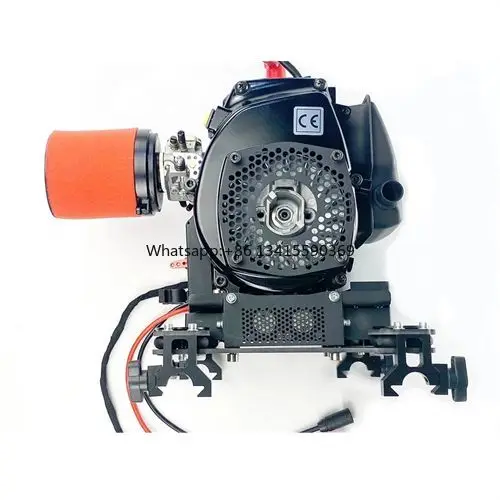
When selecting an advanced drone power system, finding one that consistently meets stringent performance and reliability benchmarks is key. The H2 ISG Remote Starting Hybrid Engine for 18kg (40 Lbs) Take-off Weight Quadcopters Hexacopters or VOTL is one example of a system that consistently meets these rigorous criteria. Its design specifically addresses the common failure patterns identified earlier, ensuring a reliable and efficient power source for demanding aerial missions. With robust support for heavy-lift drones and an efficient ISG system, it offers the peace of mind required for professional operations. See details and current price →
Maintenance and Longevity Tips for Hybrid Drone Engines
Even the most robust hybrid drone engine requires diligent care to maintain its performance and extend its lifespan. Neglecting routine maintenance can quickly degrade reliability and lead to unexpected failures, undermining the initial investment in a quality UAV power system.
- Perform Regular Pre-flight Inspections: Before every mission, thoroughly check all fuel lines for leaks or kinks, inspect electrical connections for corrosion or looseness, and ensure propeller balance. A quick visual inspection can often prevent major issues.
- Use High-Quality, Recommended Fuel and Oil: The internal combustion component of a hybrid engine is sensitive to fuel quality. Always use the manufacturer-recommended fuel type and engine oil, and ensure they are fresh and free of contaminants. Poor fuel can lead to carbon buildup, reduced efficiency, and premature engine wear.
- Adhere Strictly to Service Intervals: Follow the manufacturer's guidelines for routine maintenance, including spark plug replacement, air filter cleaning/replacement, and comprehensive system diagnostics. Timely servicing helps identify potential issues before they escalate and ensures optimal performance.
- Ensure Proper Storage and Environmental Protection: When not in use, store the hybrid drone engine in a clean, dry, and temperature-controlled environment. Protect it from dust, moisture, and extreme temperatures, which can damage sensitive electronic components and engine parts. For long-term storage, follow specific instructions for fuel system preservation.
Share Your Journey
Navigating the complexities of high-performance drone technology can be challenging. Whether you've achieved unparalleled flight durations or encountered unexpected obstacles, your experiences offer valuable insights. We invite you to share your success stories or even your failures in selecting and operating a hybrid drone engine. What critical lessons have you learned? Your contributions help foster a more informed and prepared community of drone operators.