Navigating the Maze of Precision Cutting Discs
For DIY enthusiasts, crafters, or even professional tradespeople, the challenge of achieving clean, precise cuts on hard and sometimes delicate materials is a common hurdle. Standard abrasive wheels often fail, leading to chipped edges, material waste, and immense frustration. Choosing the right tool for tasks involving ceramics, glass, stone, or hardened metals can feel like a gamble.
The sheer variety of cutting accessories available for rotary tools only adds to the dilemma. Understanding what truly matters in a cutting disc is crucial to turning a difficult task into a precise, satisfying outcome. This analysis will demystify the essential qualities of specialized cutting tools, helping you make informed decisions.
What Matters Most in Precision Abrasive Discs
When it comes to cutting through resilient materials, the effectiveness of a disc hinges on its abrasive properties. Unlike traditional blades that cut via shearing, specialized abrasive discs, particularly diamond cutting discs, work by grinding away material. This method is critical for preventing cracks and chips in brittle substances.
Key factors include the type of abrasive material, the disc's structural integrity, and its compatibility with the intended application. A high-quality disc minimizes friction and heat, extending both the tool's life and the disc's durability. Versatility across various material types is also a paramount concern for many users.
Key Specifications That Define Performance
Disc Diameter and Thickness: The Size of Your Solution
The physical dimensions of a diamond cutting disc directly impact its capabilities and optimal use. Diameters typically range from 16mm for intricate detail work up to 40mm for more substantial cuts. Smaller discs offer superior maneuverability and precision, ideal for fine lines or tight corners.
Larger discs provide a greater cutting depth and can tackle thicker materials more efficiently. Disc thickness, often measured in millimeters, influences the kerf (the width of the cut). Thinner discs create finer cuts with less material loss, but can be more fragile. Thicker discs offer increased durability but produce a wider kerf.
Shank Compatibility: The Connection to Your Power Tool
For rotary tool accessories, the shank diameter is a non-negotiable specification. Most common rotary tools utilize a 3.0mm (1/8 inch) shank. Ensuring your diamond cutting discs have the correct shank size is vital for safe and effective operation. An ill-fitting shank can lead to wobble, imprecise cuts, or even tool damage.
Always verify compatibility with your specific rotary tool model before purchase. This prevents frustrating returns and potential project delays.
Diamond Grit and Coating Quality: The Real Cutting Edge
The performance of diamond cutting discs fundamentally relies on the quality and density of their diamond coating. Industrial diamonds, bonded to a metal core, are the abrasive agents that do the work. The grit size refers to the coarseness of these diamond particles.
Finer grits (higher numbers) generally produce smoother finishes but cut slower, while coarser grits (lower numbers) cut faster but may leave a rougher edge. The manufacturing process of bonding these diamonds to the disc's core is crucial for the disc's longevity and consistent cutting power. A robust bond prevents premature diamond shedding, ensuring extended utility.
Decision Criteria: Choosing Your Diamond Cutting Discs Wisely
When faced with multiple options for diamond cutting discs, a structured approach to selection can save time and money. Consider these critical comparison points:
- Material Versatility: Can the discs effectively cut through the range of materials you typically encounter—be it glass, ceramic, stone, or metal? Some discs are optimized for specific materials.
- Precision Requirement: For intricate work like jewelry making or model building, thinner, smaller diameter discs are preferable. For rougher cuts on tiles, larger, more robust discs might be suitable.
- Shank Size Compatibility: Absolutely confirm the shank diameter matches your rotary tool (e.g., 3.0mm) to ensure a secure fit and safe operation.
- Durability and Longevity: Look for discs with a strong diamond bonding process. While hard to assess visually, manufacturer claims and user reports can provide insight into expected lifespan.
- Set Composition: Does the offering provide a range of disc sizes to cover various tasks, or are you buying individual discs for specific needs? A multi-size set often presents better value and flexibility.
| Criteria | Low-Quality Discs | High-Quality Diamond Discs |
|---|---|---|
| Cutting Efficiency | Slow, inconsistent, prone to heating | Fast, clean, consistent, low heat generation |
| Material Compatibility | Limited to softer materials, high chipping risk | Wide range (ceramics, glass, stone, metal) |
| Edge Finish | Rough, chipped, inconsistent | Smooth, precise, minimal chipping |
| Durability | Diamonds shed quickly, short lifespan | Long-lasting, robust diamond bonding |
| Tool Compatibility | May have inconsistent shank sizing | Standardized, precise shank fit (e.g., 3.0mm) |
A Product That Meets These Criteria
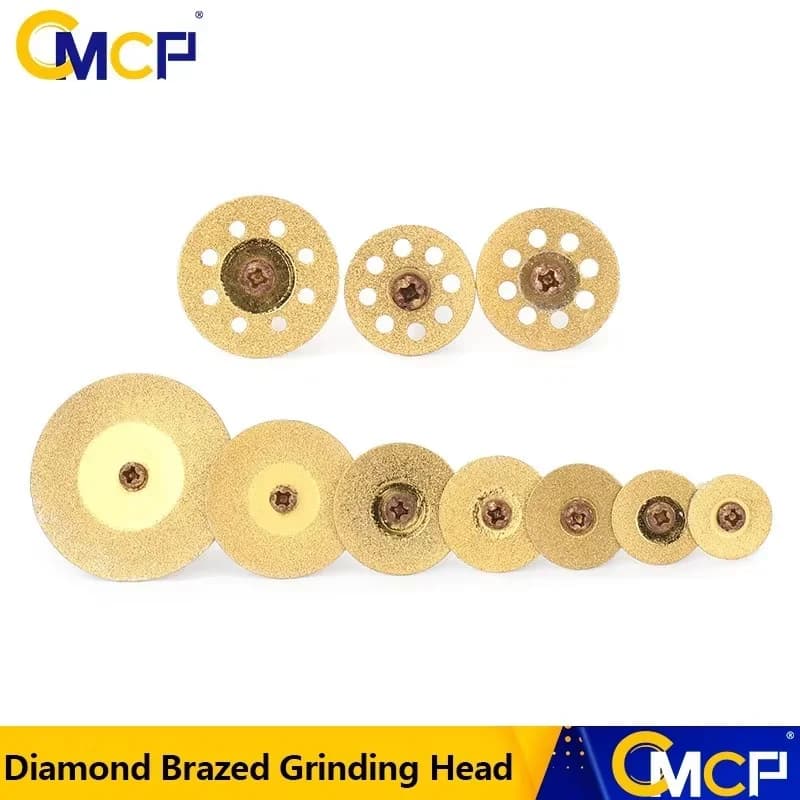
When seeking a versatile solution for precision cutting across diverse hard materials, a set that offers a range of sizes and reliable construction is often ideal. A product that meets these stringent criteria for home improvement and crafting tasks is the CMCP 10PCS Diamond Cutting Discs set.
This particular set typically includes multiple disc diameters, such as 16mm, 18mm, 20mm, 22mm, 25mm, 30mm, 35mm, and 40mm, all designed with a 3.0mm shank. This variety allows users to tackle different tasks, from fine detail work to more substantial cuts on materials like ceramics, glass, stone, and even certain metals. The diamond coating is engineered for durability, ensuring consistent cutting performance across various applications. The CMCP 10PCS Diamond Cutting Discs are a practical choice for those needing robust and flexible cutting capabilities for their rotary tool.
See details and current price →
Best Use Cases for Diamond Cutting Discs
The versatility and precision offered by quality diamond cutting discs make them indispensable for a range of applications:
- Home Renovation: Ideal for cutting ceramic or porcelain tiles for bathroom and kitchen remodels, ensuring clean edges for a professional finish.
- Glass Crafting: Perfect for intricate cuts on glass bottles, stained glass projects, or custom mirror work without splintering.
- Jewelry Making: Allows for precise shaping and cutting of semi-precious stones, shells, and small metal components.
- Model Building & Miniatures: Essential for cutting and shaping small, hard materials with high accuracy, crucial for detailed scale models.
- DIY & Hobby Projects: From modifying small metal parts to creating custom stone accents, these discs handle tasks where other tools fall short.
These diamond cutting discs are designed for anyone who requires accurate, chip-free cuts on tough materials using a rotary tool. Their specialized abrasive nature makes them a superior alternative to standard abrasive wheels for these demanding tasks.
Elevating Your Precision Cutting
Navigating the world of rotary tool accessories, especially for challenging materials, doesn't have to be daunting. Understanding the core principles behind diamond cutting discs—their abrasive nature, critical specifications like diameter, thickness, and shank size, and the importance of diamond quality—empowers you to make informed decisions.
By prioritizing compatibility and intended use, you can select the right tools to ensure your projects achieve the clean, professional finish they deserve. What are your biggest challenges when cutting tough materials, and what tools have you found most effective?