Tired of Your Car's Outdated Tech? You're Not Alone
Ever spent ten minutes trying to connect your phone for music, only to settle for static radio? Most drivers with vehicles older than a decade understand the frustration. Navigating with a phone precariously balanced on the dashboard, struggling to hear calls over road noise, or missing out on integrated smart features are common daily annoyances. This isn't just an inconvenience; it can be a significant source of distraction and inefficiency on your commute.
Millions worldwide experience this digital divide in their daily drives. While modern cars boast seamless connectivity and intuitive interfaces, older models often feel left behind. The good news is that understanding the root causes of this technological gap points directly to effective solutions.
Understanding Why Your Car's Technology Lags
The stark contrast between your smartphone's capabilities and your car's built-in system isn't accidental. Several factors contribute to this disparity, making your older vehicle's infotainment feel obsolete.
The Pace of Digital Innovation
One primary reason is the rapid acceleration of consumer electronics. Smartphones, tablets, and smart home devices evolve at an astonishing pace, with new features and processing power introduced annually. Car infotainment systems, however, are part of a much slower development cycle. A car designed in 2007, for instance, incorporated technology that was cutting-edge for its time, but that tech quickly becomes outdated compared to today's standards. This gap is continuously widening.
OEM Design Cycles and Proprietary Systems
Automotive manufacturers typically have design and production cycles spanning several years. When a car model is released, its core electronics are largely fixed for that generation. Furthermore, original equipment manufacturers (OEMs) often use proprietary hardware and software. These closed systems are designed for stability and longevity but make external upgrades or integration of third-party technologies exceptionally difficult without specialized solutions. This locks many drivers into outdated systems.
Limited Hardware Scalability
The original hardware in older vehicles was simply not built with future expandability in mind. Integrating features like wireless Apple CarPlay or Android Auto, high-resolution QLED displays, or advanced 360-degree camera inputs requires significant processing power, memory, and specialized hardware interfaces. These capabilities were either non-existent or prohibitively expensive for mass-market vehicles years ago, making direct upgrades challenging without a complete system overhaul.
Navigating Towards a Modern Driving Experience
Addressing outdated car tech doesn't always mean buying a new car. While some temporary fixes exist, a more comprehensive approach offers superior long-term benefits for your daily drive.
Temporary Fixes vs. Comprehensive Solutions
For immediate relief, many drivers resort to phone mounts for navigation or portable Bluetooth speakers for audio. These methods offer basic functionality but often come with their own set of compromises, such as cluttered dashboards, inconvenient wiring, or poor audio quality. They act as bandages rather than solving the core problem of a disconnected driving experience.
The Power of a Modern Head Unit Upgrade
The most effective and integrated solution for a significant car infotainment upgrade is replacing the vehicle's head unit. A modern head unit, often referred to as an aftermarket stereo or receiver, brings contemporary features directly into your dashboard. These units are designed to integrate seamlessly with your car's existing electrical system, offering a robust platform for navigation, communication, and entertainment. They transform the entire driving experience, making it safer, more enjoyable, and truly connected.
Choosing the Right Car Infotainment Upgrade: A Checklist
Selecting an aftermarket head unit requires careful consideration to ensure it meets your specific needs and integrates well with your vehicle. Here's a checklist of criteria to evaluate potential solutions:
| Criterion | Why It Matters |
|---|---|
| Vehicle-Specific Compatibility | Ensures a perfect fit, maintains dashboard aesthetics, and integrates with existing steering wheel controls and wiring. |
| Operating System & Features | Look for wireless Apple CarPlay and Android Auto, integrated GPS navigation, Bluetooth, and RDS for modern functionality. |
| Display Quality & Size | A high-resolution QLED display offers superior clarity and vibrant colors; adequate size improves visibility without obstructing views. |
| Connectivity Options | Robust Wi-Fi, multiple USB ports, and stable Bluetooth ensure seamless device pairing and internet access for apps. |
| Expandability & Safety Features | Support for parking sensors, reverse cameras, or even 360-degree camera systems enhances safety and convenience. |
Evaluating Key Features for Your Upgrade
- Wireless Integration: The convenience of wireless Apple CarPlay or Android Auto cannot be overstated. It eliminates cable clutter and ensures your smartphone's navigation, music, and communication apps are instantly accessible on your car's screen.
- Advanced Navigation: While phone apps are useful, an integrated GPS system provides reliable turn-by-turn directions, often with offline map capabilities, ensuring you're never lost, even in areas with poor cellular signal.
- Audio Fidelity: Modern head units often include digital signal processing (DSP) for customized sound profiles and support for high-quality audio formats. RDS (Radio Data System) provides useful information like song titles and artist names on FM radio.
- Safety Enhancements: Support for various camera inputs, including front, rear, and even 360-degree views, significantly improves parking safety and overall situational awareness, especially in older vehicles that lacked these features originally.
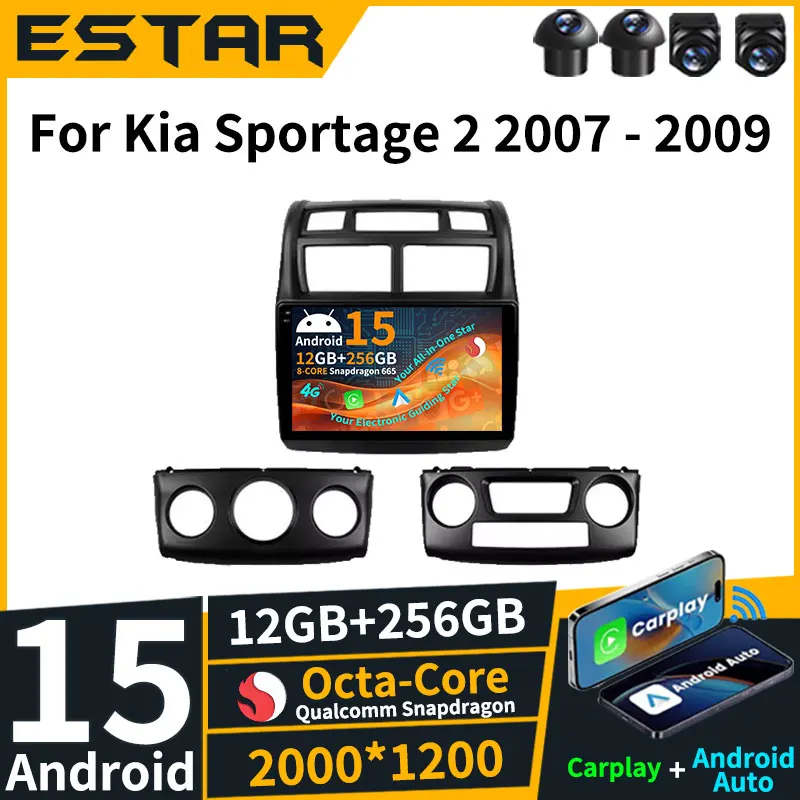
A product that meets these criteria, especially for specific older models like the Kia Sportage 2 (2007-2009), is the Qualcomm Android 15 head unit. It offers a comprehensive car infotainment upgrade, bringing features like wireless Apple CarPlay and Android Auto, a vibrant QLED display, integrated GPS navigation, and support for a 360-degree camera system. This particular unit is designed to integrate seamlessly, transforming the driving experience for owners of these specific vehicles.
Many users report that such dedicated systems significantly enhance both functionality and the aesthetic appeal of their dashboard. Based on manufacturer specs, the Qualcomm Android 15 unit provides a direct fit solution, ensuring that the critical integration with steering wheel controls and original vehicle aesthetics is maintained. Data suggests that upgrading to a modern head unit can revitalize the feel of an older vehicle, making daily commutes more enjoyable and safer. If you are considering an advanced car infotainment upgrade for your Kia Sportage 2, you can See details and current price →.
Smart Driving: Bonus Tips Without a New System
While a full head unit replacement offers the most integrated experience, there are still ways to enhance your driving experience without a significant purchase.
- Secure Phone Mounts: A sturdy, well-placed phone mount is crucial for safe navigation. It keeps your device visible for GPS directions without requiring you to look down, minimizing distraction. Choose one that firmly grips both your phone and the car's interior.
- Offline Maps: Before embarking on a journey, download offline maps for your route using apps like Google Maps or HERE WeGo. This ensures you'll have navigation capabilities even in areas with no cellular signal, saving data and preventing frustrating detours.
- Simple Bluetooth Adapters: If your older car has an AUX input but no Bluetooth, a small, inexpensive Bluetooth receiver can be a game-changer. These devices plug into your AUX port, allowing you to wirelessly stream music and podcasts from your phone through your car's speakers.
Revitalize Your Ride: A Smarter Drive Awaits
Living with outdated car technology doesn't have to be a permanent state. By understanding why your vehicle's tech lags behind and exploring the array of solutions available, you can significantly enhance your driving experience. Whether you opt for a comprehensive car infotainment upgrade or implement smart, cost-effective tips, the goal is a safer, more connected, and enjoyable journey.
Which solution resonates most with your driving needs? Share your experiences and what steps you've taken to modernize your ride in the comments below!