The Frustration of Fading Temperatures
Ever packed a refreshing cold drink for a long commute, only to find it lukewarm by mid-morning? Or perhaps you've brewed a perfect coffee for your remote work session, yet it's chilled before you've even finished your first task. This common frustration affects millions daily, transforming what should be a simple pleasure into a constant battle against thermodynamics. The disappointment of a drink that quickly loses its ideal temperature is universally understood, impacting everything from hydration goals to daily comfort.
Many people blame external factors like ambient heat or cold, but the real causes are often more fundamental. Understanding why your beverages struggle to maintain their temperature is the first step toward a lasting solution.
The Science Behind Temperature Loss
The rapid change in your drink's temperature isn't just bad luck; it's a direct consequence of the laws of physics. Heat energy always seeks equilibrium, moving from warmer areas to colder ones. In the context of your beverage, this means heat from the environment enters your cold drink, or heat from your hot drink escapes into the cooler air. This transfer occurs through three primary mechanisms:
Conduction: The Direct Drain
Conduction is the transfer of heat through direct contact. When your drink sits in a standard cup, the liquid directly touches the cup's inner wall. That heat then travels through the material of the cup to its outer surface, and finally into your hand or the surrounding air. Materials like thin plastic or glass are excellent conductors, meaning heat passes through them quickly, making your drink warm up or cool down at an accelerated rate.
Convection: Heat on the Move
Convection involves heat transfer through the movement of fluids (liquids or gases). Inside your cup, warmer liquid near the walls rises, while cooler liquid sinks, creating currents that distribute heat. More critically, if your cup has an open top or a poorly sealed lid, air currents around the cup can carry away heat from hot drinks or introduce heat to cold ones. This constant circulation effectively 'sweeps away' the desired temperature.
Radiation: Invisible Transfer
Radiation is the transfer of heat through electromagnetic waves, even across empty space. While less dominant than conduction or convection in everyday containers, surfaces absorb and emit thermal radiation. A dark-colored cup, for instance, will absorb more radiant heat from the sun or a warm room, transferring that energy to your drink. Conversely, a hot drink in any container will radiate some of its heat outwards.
Finding Your Ideal Temperature Guardian
Given these scientific principles, the most effective solution for maintaining drink temperature is to minimize all three forms of heat transfer. General solutions include using thicker materials, employing insulating sleeves, or opting for containers specifically designed for thermal retention. The most effective approach, widely backed by engineering principles, is vacuum insulation.
The Power of Vacuum Insulation
Vacuum insulated water bottles are engineered to create a barrier against heat transfer. They feature a double-walled construction with a vacuum (a space devoid of air) between the inner and outer walls. This vacuum dramatically reduces heat transfer by conduction and convection because there are very few molecules to transmit heat. Additionally, many high-quality insulated water bottles incorporate a reflective coating on the vacuum layer, which helps to block radiant heat transfer, much like a thermos bottle. This multi-pronged approach ensures your drinks stay hot or cold for extended periods.
Key Features to Look For
When selecting an insulated water bottle, consider these criteria to ensure optimal performance and durability:
| Feature | Why It Matters | Ideal Specification |
|---|---|---|
| Insulation Type | Directly impacts temperature retention. | Double-wall vacuum insulation. |
| Material Quality | Affects durability, taste, and safety. | Food-grade 18/8 stainless steel (BPA-free). |
| Lid Design | Crucial for preventing spills and heat loss. | Leak-proof, insulated, easy-to-clean. |
| Capacity | Matches your daily hydration needs. | Appropriate for activity level (e.g., 20oz for desk, 40oz+ for outdoors). |
| Durability & Portability | Withstands daily wear and travel. | Robust construction, comfortable to carry. |
Many users report that selecting an insulated water bottle based on these criteria significantly improves their ability to keep drinks at the desired temperature throughout the day. A product that meets these stringent requirements will offer reliable performance, whether you're navigating a busy workday or exploring the outdoors. For those seeking a dependable solution for long-lasting temperature retention, a large capacity option is often ideal.
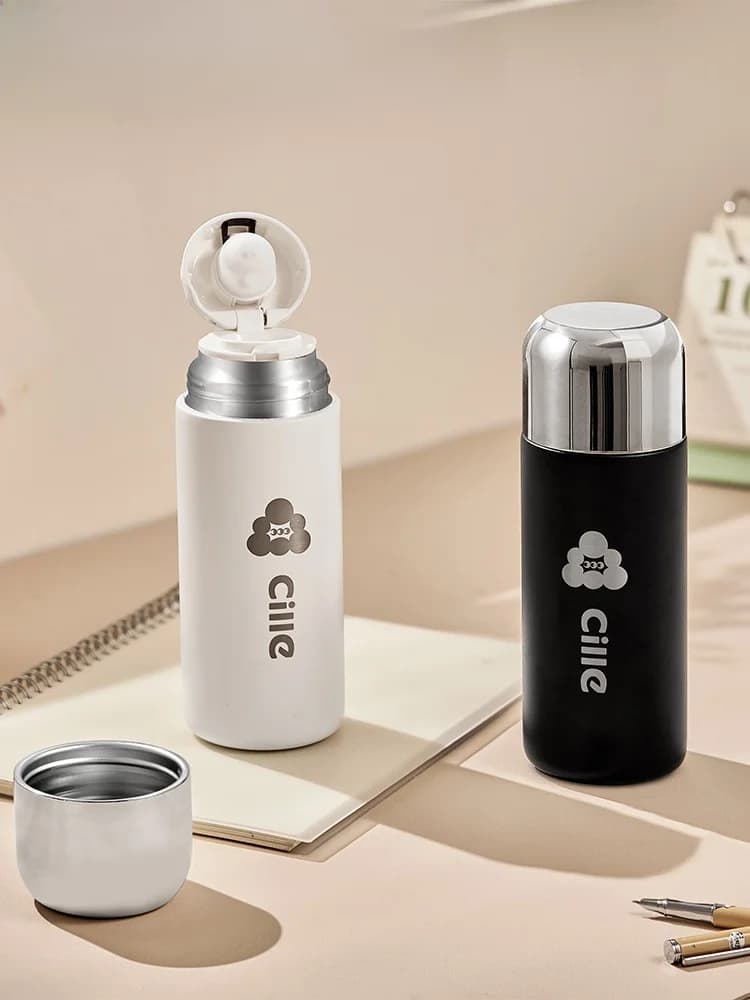
A product that exemplifies these features is the Large Capaci Insulated Stainl Steel Water Bottle for Men And Women Suitable for School Use New 2023 Portable Cup. Designed with durable stainless steel, it offers significant capacity, making it suitable for all-day use for both school and adult activities. Data suggests that its robust double-wall construction helps maintain temperatures effectively, providing a practical solution for those who need their drinks to stay cold or hot for extended periods. This particular portable cup focuses on combining high capacity with effective insulation, addressing a key need for many users.
Maximizing Your Drink's Lifespan
Even with the best insulated water bottle, a few simple habits can further extend the life of your drink's ideal temperature. These tips work without any additional purchases:
Beyond the Bottle: Smart Habits
- Pre-condition Your Bottle: Before adding your drink, fill the bottle with hot tap water for hot beverages or ice water for cold beverages. Let it sit for 5-10 minutes, then empty. This pre-heats or pre-cools the inner wall, minimizing initial temperature shock and helping your drink stay at its target temperature longer.
- Fill It Up: A fuller bottle has less air space, reducing the amount of air available for convection inside the bottle. Fill your insulated water bottle as much as possible to create a more stable thermal environment.
- Avoid Direct Sunlight: Even the most advanced insulation can be challenged by direct sunlight. UV radiation and ambient heat will eventually warm the outer shell, slowly affecting the internal temperature. Keep your bottle in the shade or covered when outdoors.
Why Capacity Matters
Larger volumes of liquid tend to retain their temperature more effectively than smaller ones. This is due to the ratio of surface area to volume. A large capacity insulated water bottle has a relatively smaller surface area exposed to heat transfer compared to its total volume, meaning it takes longer for the overall temperature to change. This is a crucial factor for those who need all-day temperature stability for their beverages.
Your Path to Perfectly Maintained Drinks
The frustration of lukewarm coffee or warm water doesn't have to be a daily battle. By understanding the scientific principles of heat transfer and applying smart selection criteria for your containers, you can significantly improve your daily experience. Choosing a well-designed insulated water bottle is a practical investment in your comfort and hydration. Combine this with simple pre-conditioning and mindful usage, and you'll enjoy your beverages at their ideal temperature, sip after sip, throughout your day.
What are your biggest challenges in keeping drinks hot or cold? Share your experiences and any clever tricks you've discovered in the comments below!