The Frustration of Sensitive Ears and Earring Irritation
Ever put on a beautiful pair of earrings, only to feel discomfort or irritation just hours later? For millions, the joy of accessorizing is often overshadowed by persistent itching, redness, swelling, or even pain around their earlobes. It's a common dilemma that can turn a stylish choice into an annoying ordeal, leading many to abandon earrings altogether.
This isn't just a minor annoyance; it can be a significant source of frustration, limiting personal expression and confidence. Most people blame general 'allergies' for their ear problem – but the real cause is often more specific and surprisingly simple to address.
Unmasking the Root Causes of Earring Discomfort
Understanding why your ears react poorly to certain earrings is the first step towards finding lasting relief. Scientific evidence points to a few primary culprits behind most cases of earring irritation, especially for those with genuinely sensitive ears.
Nickel Allergy: The Most Common Culprit
The leading cause of contact dermatitis related to jewelry is a nickel allergy. Nickel is a common metal often mixed into alloys to add strength and reduce cost, even in jewelry marketed as 'hypoallergenic' unless specified. When nickel comes into prolonged contact with skin, especially moist skin, it can leach out and trigger an immune response.
According to dermatological research, this reaction can manifest as itching, redness, inflammation, and even blistering. Once developed, a nickel allergy is permanent, meaning exposure will almost always result in a reaction.
Material Quality and Porosity
Beyond nickel, the overall quality and surface finish of the earring material play a crucial role. Cheap, porous metals can harbor bacteria, making it difficult to keep the piercing clean and sterile. Microscopic imperfections on the post or backing can also create friction against the delicate skin of the piercing, leading to micro-abrasions and subsequent irritation or infection.
Even materials like sterling silver, while generally well-tolerated, can tarnish and oxidize, potentially causing irritation for very sensitive individuals if not regularly cleaned.
Earring Design and Physical Stress
The physical design of an earring, particularly the backing, significantly impacts comfort. Traditional butterfly backs can pinch the earlobe, trap moisture and bacteria, and apply uneven pressure. This constant friction or pressure can impede air circulation, prevent healing, and exacerbate irritation, especially during sleep or prolonged wear. Heavy or dangling earrings can also pull on the piercing, causing undue stress and potentially enlarging the piercing hole over time.
Effective Solutions: Beyond Just 'Hypoallergenic'
Solving earring irritation for sensitive ears requires a multi-faceted approach, focusing on both the material and the design. The most effective strategy involves prioritizing specific types of biocompatible metals and rethinking traditional earring backings.
Embrace Biocompatible Materials
General 'hypoallergenic' labels can be misleading. Instead, look for specific materials known for their inertness and low reactivity with human tissue. These include:
- Surgical Stainless Steel: High-grade stainless steel (316L or 316LVM) contains minimal nickel that is tightly bound within the alloy, making it resistant to leaching. It's widely used in medical implants.
- Titanium: Often considered the most biocompatible metal, titanium is completely nickel-free and extremely lightweight. It's an excellent choice for new piercings and highly sensitive skin.
- Niobium: Similar to titanium, niobium is inert and nickel-free, available in various colors without plating.
- Solid Gold (14k or higher): Ensure it's solid gold, not gold-plated, and avoid alloys with high nickel content. White gold often contains nickel, so opt for yellow gold or palladium white gold.
Prioritize Comfortable and Secure Designs
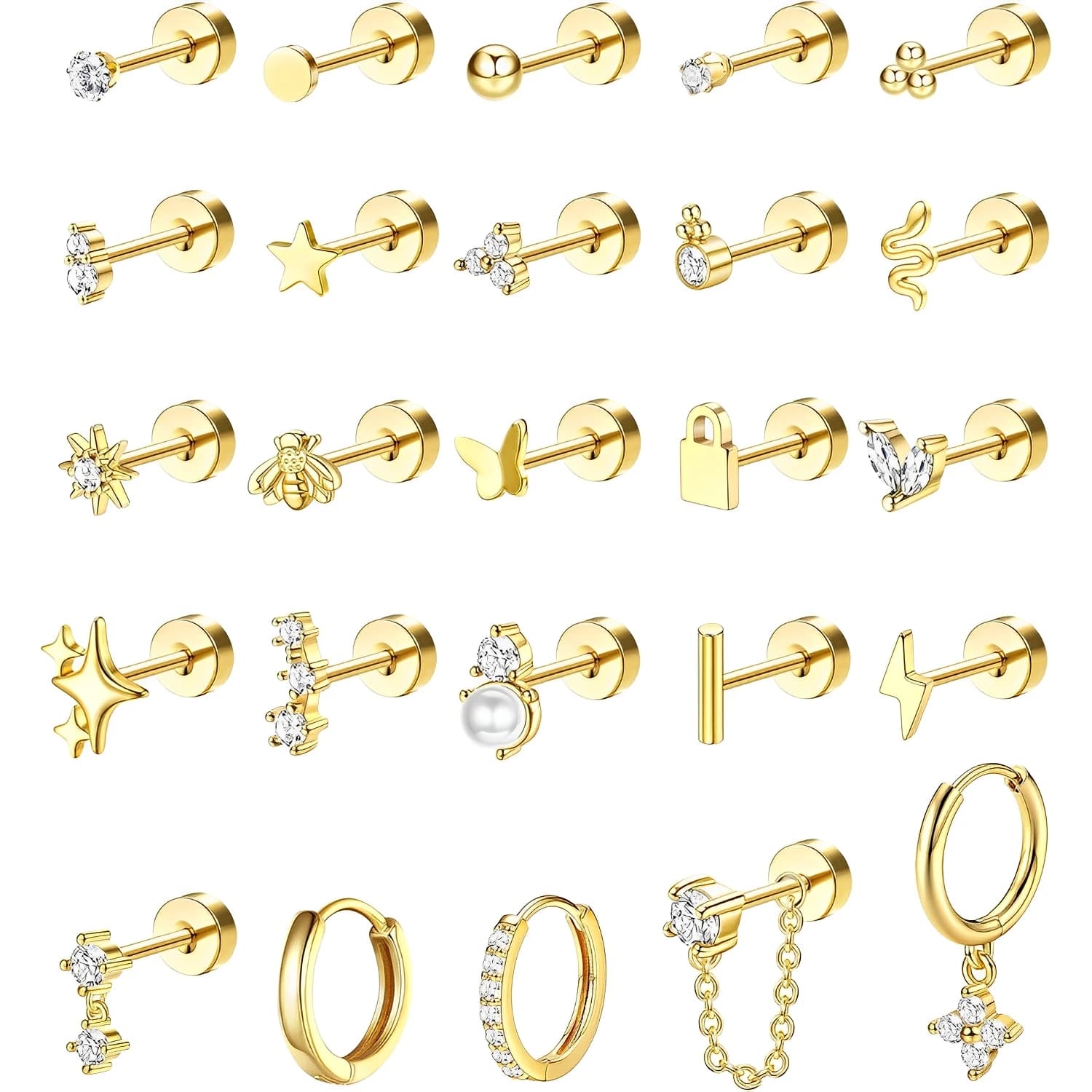
The backing and overall design are just as critical as the material. Flat back earrings, also known as labret studs, are gaining popularity for their superior comfort and suitability for sensitive ears.
Unlike traditional butterfly backs, a flat back sits flush against the back of the earlobe, minimizing pressure, preventing snagging, and promoting better air circulation. This design is particularly beneficial for cartilage piercings and for those who wear earrings continuously, including while sleeping.
Your Selection Checklist for Irritation-Free Earrings
To navigate the market and choose earrings that truly cater to sensitive ears, use this checklist to evaluate potential options:
| Criteria | Why It Matters for Sensitive Ears | What to Look For |
|---|---|---|
| Material Purity | Prevents allergic reactions and reduces bacterial buildup. | Surgical Stainless Steel (316L/316LVM), Titanium (G23/F-136), Niobium, 14k+ Solid Gold. |
| Backing Design | Minimizes pressure, snagging, and allows airflow. | Flat back (labret) posts, threadless or internally threaded. Avoid butterfly backs for continuous wear. |
| Post Thickness & Smoothness | Prevents micro-tears and discomfort during insertion/wear. | Smooth, polished posts. Standard gauge (e.g., 20g or 18g) is typical for lobes. |
| Ease of Cleaning | Essential for hygiene and preventing infection. | Simple designs with minimal crevices, non-porous materials. |
| Durability & Longevity | Ensures the earring maintains its integrity and hypoallergenic properties over time. | Materials resistant to tarnish, corrosion, and wear. |
A product that meets these criteria for sensitive ears is the Bobisty 1pc Earrings Surgical Stainless Steel Earrings. These dainty flat back ear studs are designed specifically for women with sensitive ears, offering a combination of surgical stainless steel material and a secure, comfortable flat back design. Many users report that this type of earring significantly reduces irritation and allows for extended, comfortable wear, even for cartilage piercings. They exemplify the shift towards functional design and high-quality materials over mere aesthetic appeal for those prioritizing ear health.
Bonus Tips for Happier, Healthier Earlobes (No Purchase Necessary!)
While choosing the right earrings is paramount, several practices can further reduce irritation and maintain healthy piercings, without requiring any new purchases:
- Regular Cleaning: Clean your earrings and earlobes frequently with a mild, fragrance-free soap or saline solution. This removes accumulated dirt, oil, and bacteria that can contribute to irritation. Be gentle and ensure all soap residue is rinsed away.
- Give Your Ears a Break: If you wear earrings constantly, consider taking them out for a few hours each day, especially overnight. This allows your piercings to breathe and prevents continuous pressure or friction.
- Rotate Your Jewelry: Avoid wearing the same pair of earrings for extended periods. Even with high-quality materials, prolonged contact can sometimes lead to localized irritation. Rotating your jewelry reduces continuous exposure to a single material or design.
Embrace Comfort and Style with Confidence
Understanding the science behind earring irritation empowers you to make informed choices that prioritize your comfort and ear health. By focusing on biocompatible materials like surgical stainless steel or titanium and opting for thoughtful designs such as flat back earrings, you can enjoy accessorizing without the accompanying frustration.
No longer do sensitive ears have to mean sacrificing style. With the right knowledge and choices, comfortable and irritation-free earring wear is entirely achievable.
Have you found a specific solution or a particular type of earring that works wonders for your sensitive ears? Share your experiences and tips with the DailyWiz community below!