The Foundational Questions About Early Math for Toddlers
Many parents and caregivers frequently ask about the best ways to introduce numbers and counting to young children. In an age dominated by screens, the challenge of fostering genuine understanding of early math for toddlers can feel daunting. These are the questions that keep coming up from forums and communities about nurturing foundational numeracy — let's settle them, once and for all, with expert insights.
Why is Early Math for Toddlers So Crucial for Development?
Introducing early math concepts to toddlers extends far beyond simple counting. It lays a critical groundwork for cognitive development, problem-solving abilities, and even language acquisition. Research indicates that children with strong early number sense often demonstrate better academic outcomes later in elementary school, particularly in mathematics and reading comprehension.
A 2018 study published in the journal Child Development found that the quantity of spontaneous math talk and exposure to number-related activities in the home environment at ages 1-3 significantly correlated with children's math abilities at age 5.
Developing number sense at this age means understanding quantities, recognizing patterns, and beginning to grasp concepts like 'more' and 'less'. These aren't just abstract ideas; they are fundamental building blocks for logical thought.
What's the Best Age to Introduce Counting and Numbers?
While there's no strict universal age, toddlers typically begin showing interest in numbers and counting between 18 months and 3 years old. The key is to follow the child's readiness cues rather than forcing rote memorization.
Around 18-24 months, many toddlers can begin to understand the concept of 'one' and 'two'. By 2-3 years, they often start mimicking counting and can identify small quantities. True one-to-one correspondence, where each item counted matches a single number, usually develops closer to age 3 or 4.
Focus on playful, low-pressure interactions. Early introduction should prioritize exposure and exploration over strict mastery of numerical sequences.
How Can I Make Learning Numbers Engaging Without Screens?
The most effective way to engage toddlers in early math without relying on digital devices is through hands-on, tactile, and play-based experiences. Children learn best by doing, touching, and manipulating objects.
Montessori principles emphasize sensory exploration and practical life skills, which translate exceptionally well to early numeracy. Activities that involve sorting, matching, grouping, and counting physical objects naturally build number sense. These methods encourage active learning and intrinsic motivation.
Consider integrating counting into daily routines: counting carrots at snack time, counting steps, or counting fingers and toes during playtime. This makes learning feel natural and relevant to their world.
What Specific Activities or Materials Support Genuine Number Sense?
Genuine number sense in toddlers is cultivated through activities that emphasize one-to-one correspondence and quantity recognition before abstract symbols. Simple, tangible materials are often the most effective.
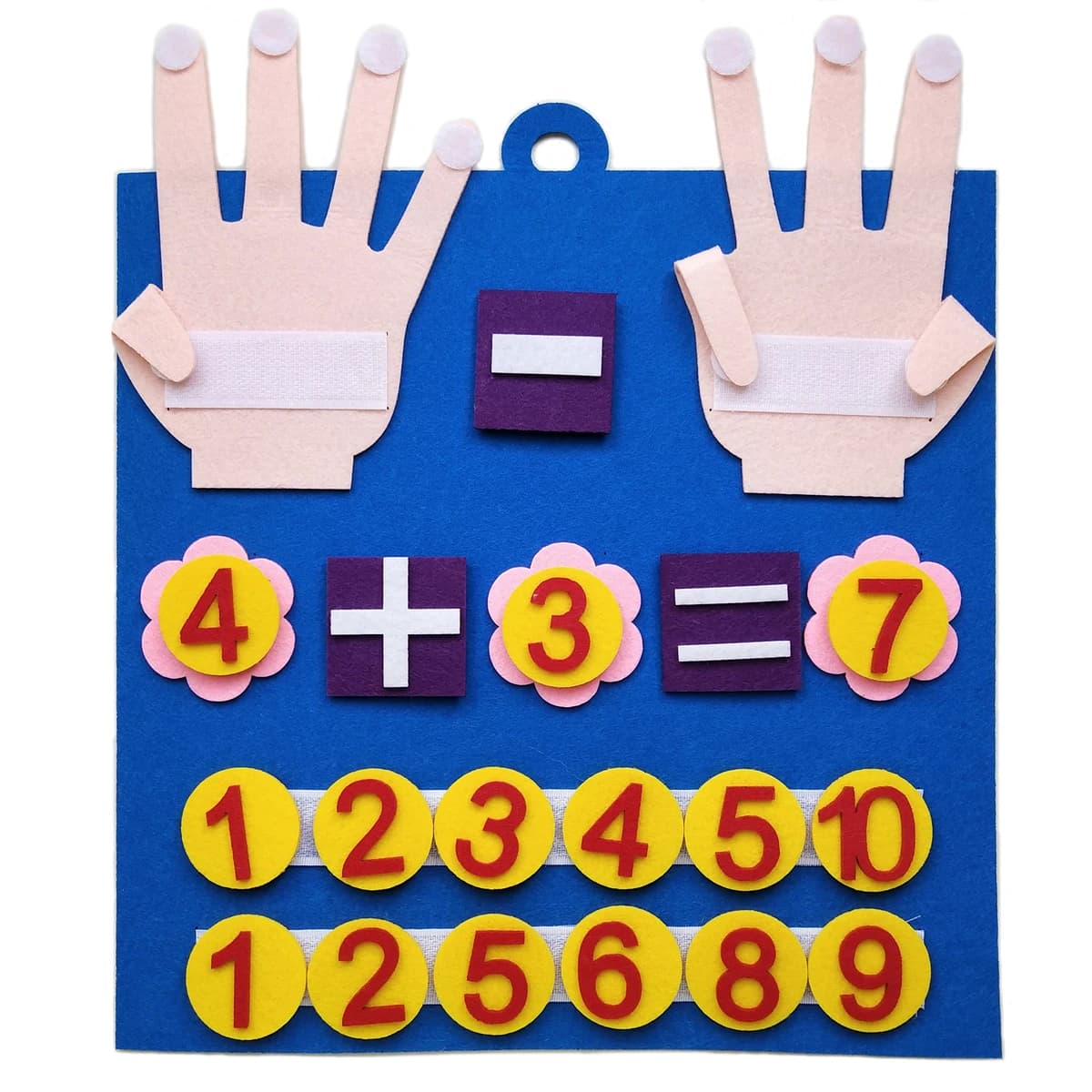
- Finger Counting: Using fingers to represent numbers is a primal and highly effective method. It connects a physical action to a numerical value.
- Counting Objects: Encourage counting everyday items like blocks, toys, or pieces of fruit. Physically touching each item as it's counted reinforces the concept.
- Number Matching: Match quantities to numerals. For example, lay out three buttons and then find the numeral '3'.
- Sorting Activities: Sorting by color, size, or shape subtly introduces categorization and pre-math skills.
- Felt or Fabric Play: Tactile materials like felt numbers allow children to manipulate and explore shapes and quantities in a multi-sensory way, enhancing retention.
Avoid rushing to flashcards or worksheets that focus solely on numeral recognition without connecting to quantity.
Are All “Educational” Toddler Counting Toys Equally Effective?
No, the effectiveness of