The Coffee Storage Dilemma: Which Container Keeps Beans Fresher?
You've just bought premium coffee beans, but opening your pantry a week later reveals a problem—they've lost that fresh-roasted aroma. The culprit isn't the beans themselves; it's how they're stored.
The coffee storage decision isn't straightforward. Should you invest in airtight containers that seal oxygen out completely? Or do vented containers work better by allowing CO2 (released by beans) to escape while minimizing oxygen exposure?
Key Takeaways (TL;DR):
- Vacuum-sealed containers preserve coffee freshness 2-3x longer than standard jars
- Vented containers allow beneficial CO2 release while limiting oxygen contact
- Airtight doesn't always mean best—the type of seal matters more than closure alone
- Moisture-proof design prevents humidity damage, extending shelf life by weeks
- Storage location (cool, dark place) matters as much as the container itself
Understanding Coffee Storage Container Types
Coffee storage containers fall into distinct categories, each with different mechanisms for protecting beans from degradation. Understanding these categories helps explain why a $5 jar sometimes outperforms a $50 container—and when expensive options actually deliver value.
The Four Main Container Types
Most coffee storage containers fit into one of these categories: standard airtight containers (plastic or glass with simple seals), one-way vented containers (allow CO2 escape only), vacuum-sealed options (remove air completely), and specialized moisture-proof designs (with desiccant features). Each solves a different storage problem based on your usage and climate.
What Actually Matters in Coffee Container Design
Not all "airtight" seals are equal. Three factors determine how well a container preserves coffee freshness: oxygen barrier capability, moisture resistance, and light blocking. These three elements work together—overlooking any one significantly reduces overall effectiveness.
Oxygen Exposure & Oxidation Speed
Oxygen is coffee's primary enemy. It causes rancidity and degradation, similar to how vegetable oil goes bad. A truly airtight coffee storage container reduces oxygen contact by 95%+, while standard jars only block 40-60% of oxygen exchange. Vacuum-sealed options eliminate virtually all atmospheric oxygen initially, though some oxygen will return over weeks as the seal naturally opens slightly with temperature changes.
CO2 Release & Freshness Window
Fresh-roasted beans release CO2 for 5-10 days after roasting. Too much pressure buildup can degrade flavor compounds, which is why some airtight containers actually age coffee faster than intended. Vented containers solve this by allowing one-way gas release while still blocking oxygen from entering, creating an optimal aging environment.
Moisture & Humidity Resistance
Coffee's hygroscopic nature means it absorbs moisture from air. Humidity causes flavor degradation and promotes mold growth. Containers with tight seals and low moisture permeability keep beans stable 2-3 times longer than breathable options. This becomes critical in humid climates or kitchens near water sources.
Opacity & Light Protection
Light exposure triggers chemical reactions that break down coffee oils and compounds. Clear containers rank lowest for freshness preservation. Dark or opaque designs extend freshness by blocking UV rays entirely, adding an additional 1-2 weeks to peak flavor duration.
Airtight vs Vented: Head-to-Head Comparison
Airtight Containers: Complete Oxygen Exclusion
Airtight containers create a complete seal against atmospheric exchange. Advantages: maximum freshness duration (3-4 weeks vs 1-2 weeks in standard jars), better for long-term storage, no light penetration if opaque design. Drawbacks: can trap CO2 initially if beans are very fresh, creates pressure that sometimes forces odor into surrounding pantry items.
Vented Containers: Selective Gas Exchange
Vented designs use one-way valves that let CO2 escape while blocking oxygen entry. Advantages: reduces pressure during the initial degassing phase, allows fresher beans to age optimally, prevents flavor-altering pressure buildup. Disadvantages: less protection than fully airtight (2-3 weeks freshness vs 3-4), requires functional valve (can fail with age or poor maintenance).
Vacuum-Sealed Hybrid Approach
Some premium coffee storage containers combine both: initial vacuum seal (removes 90%+ of oxygen) plus a one-way vent (allows subsequent CO2 release). This hybrid approach delivers both benefits—maximum initial oxygen removal plus proper degassing management for newly roasted beans.
Standard Jars & Improvised Containers
Basic glass jars with simple rubber seals provide minimal protection. While better than open storage, they lose 60-70% of freshness within 7-10 days due to oxygen permeability. Cost is low ($3-8), but replacement frequency and flavor loss make them inefficient long-term compared to dedicated coffee storage solutions.
Moisture-Proof Specifications Impact Performance
Two containers with identical seals perform differently if one uses moisture-resistant materials and the other doesn't. Silicone gaskets, food-grade plastic, and treated glass all impact how long beans stay fresh. This is why container quality correlates with price more than seal type alone.
Key Specifications: Side-by-Side Comparison
| Feature | Airtight | Vented | Vacuum-Sealed | Standard Jar |
|---|---|---|---|---|
| Freshness Duration | 3-4 weeks | 2-3 weeks | 4-5 weeks | 1-2 weeks |
| Oxygen Exclusion | 90-95% | 75-85% | 95-99% | 40-60% |
| CO2 Management | Traps pressure | Vents safely | Vents after seal | Free exchange |
| Light Protection | Depends on color | Depends on color | Usually opaque | Usually clear |
| Cost Range | $8-20 | $12-25 | $15-35 | $3-8 |
When Vacuum-Sealed Storage Proves Worth the Investment
Vacuum-sealed containers with venting capabilities represent the current standard for serious coffee storage. These work by initially removing atmospheric oxygen (the vacuum part), then allowing CO2 from the beans to escape through a one-way valve. The result: beans stay fresher 40-50% longer than standard airtight containers.
This approach matters most in three scenarios: when buying in bulk (3+ months of beans at once), when storing expensive specialty coffees ($15-30+ per bag), and when climate is humid or warm (where moisture and heat accelerate degradation).
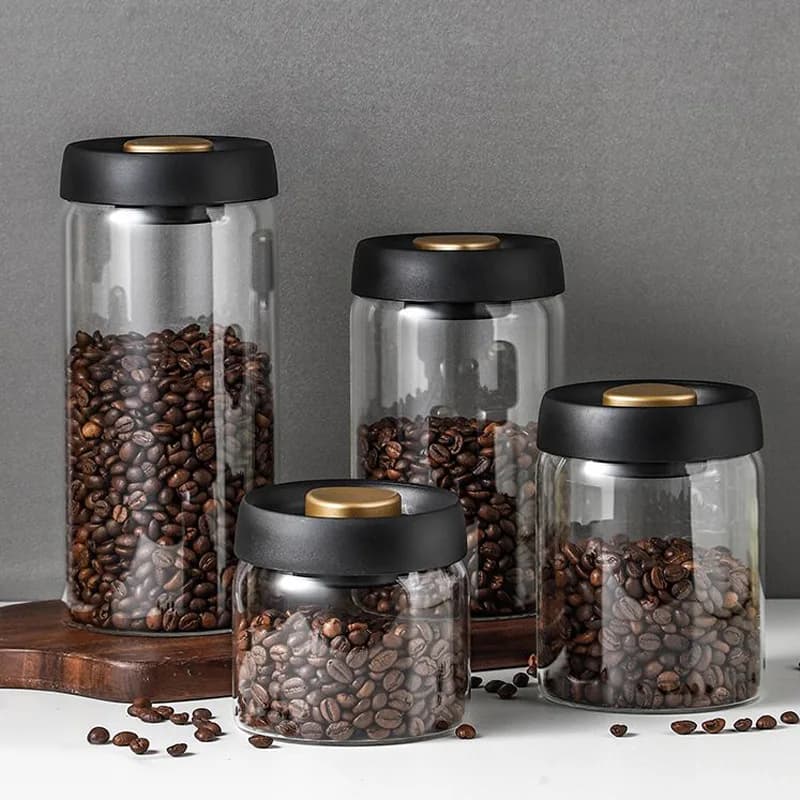
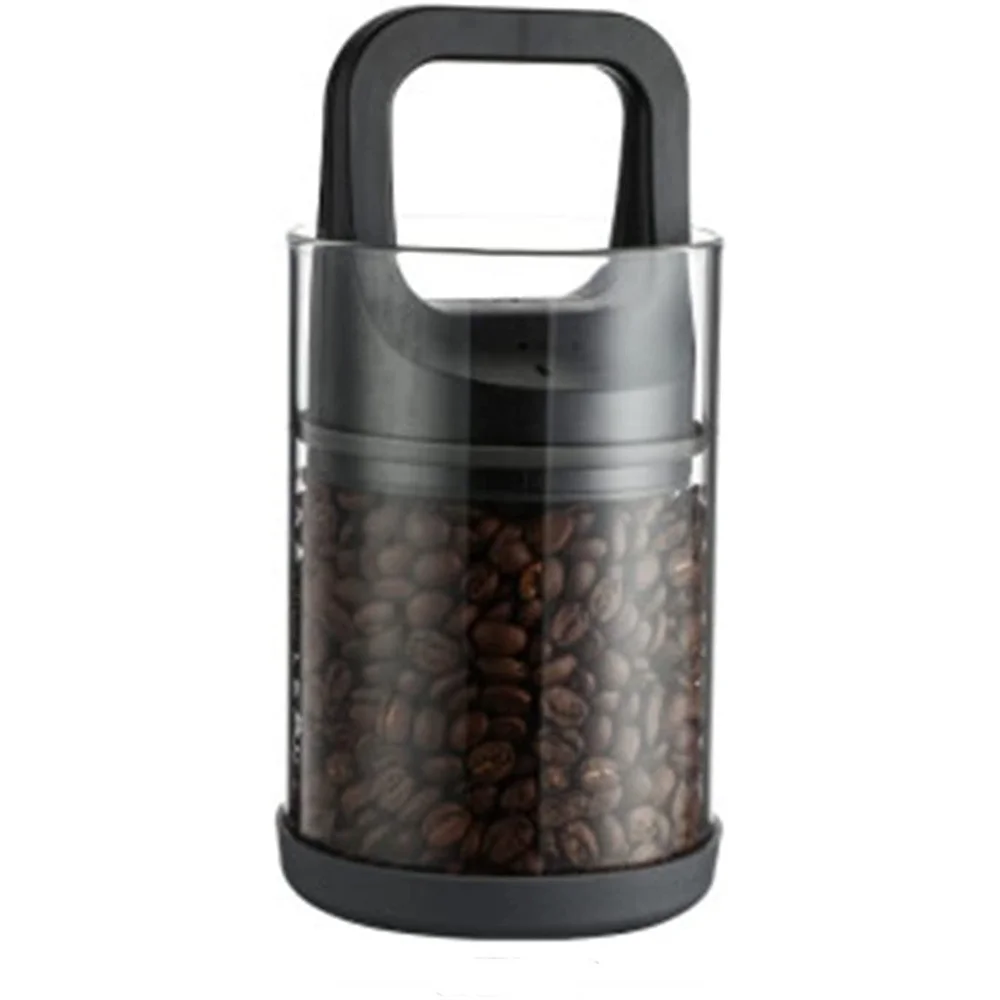
A product that meets these criteria is the Clear Container Coffee Cans with Vented and Vacuum Sealed design. This container combines both technologies: the vacuum-seal mechanism removes initial oxygen while the vented valve allows proper CO2 release. The transparent design lets you see bean levels at a glance, and the moisture-proof seal extends freshness by an additional 1-2 weeks compared to standard vacuum containers. See details and current price →
Best Container Choices for Different Coffee Types
Light Roasts & Filter Coffees
Light roasts have the shortest optimal freshness window (10-14 days peak). Vacuum-sealed containers with venting are ideal because they preserve delicate flavor compounds during this critical period. The one-way valve prevents flavor-dulling pressure buildup on newly roasted beans.
Espresso Beans & Dark Roasts
Darker roasts are more forgiving—they stay flavorful 20-30 days even in basic airtight containers. However, vacuum-sealed designs still add 30-50% more freshness duration. If you make espresso 3-4 times weekly, a single vacuum container easily outlasts two standard ones in flavor quality per dollar spent.
Bulk & Long-Term Storage
For storing 1+ months of beans, vacuum-sealed storage is no longer optional—it's economical. The 40-50% longer freshness means you consume more beans at peak flavor and less at stale. For a $40/month coffee budget, this translates to $15-20 in reduced waste.
FAQ: Common Questions About Coffee Storage
Can you reuse coffee bags instead of buying storage containers?
Coffee bags are engineered for short-term freshness (2-4 weeks from roast), not extended storage. They use thinner materials and simpler seals than dedicated containers. You'll lose 30-40% more freshness in a reused bag versus a proper container. After 2-3 uses, the seal integrity degrades significantly.
Does freezer storage eliminate the need for quality containers?
Freezing slows degradation but doesn't stop it. Frozen beans still oxidize, though at 1/10th the rate. The real problem: freezer moisture (condensation when beans return to room temperature) damages flavor faster than oxidation alone. A vacuum-sealed container at room temperature actually outperforms frozen beans in a basic bag.
How do you know when a coffee container seal has failed?
Two signs: the container no longer feels vacuum-sealed (no resistance when opening), and beans lose aroma quickly after opening. If beans smell stale within 3-4 days of opening a sealed container, the seal has likely failed. Inspect the gasket for cracks or wear.
The right coffee storage solution isn't about spending the most—it's about matching the container type to your consumption rate and climate. What does your coffee routine look like: daily espresso, weekend filter coffee, or bulk storage? Your answer determines whether basic airtight, vented, or vacuum-sealed makes the most sense for your situation.